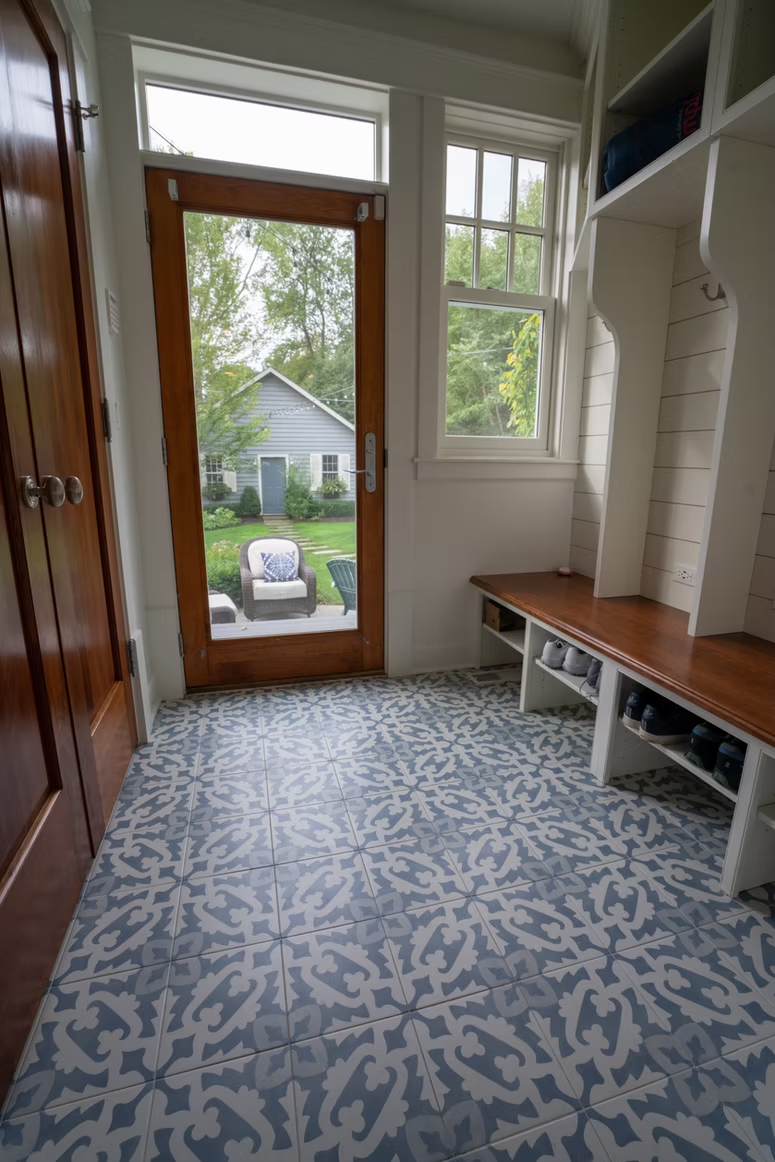
Porcelain and natural stone can both create beautiful spaces, but they're very different materials.
One isn't necessarily better than the other. The right choice depends on where the tile will be installed, how the space will be used, the amount of maintenance you're comfortable with, and the look you want to achieve.
At Bella Tile & Stone, we help clients throughout Wilmette and Chicago's North Shore compare materials in person and understand those differences before making a selection.
Porcelain is known for its durability, low water absorption, and versatility.
It's available in an enormous variety of sizes, colors, textures, and finishes and can recreate the appearance of limestone, marble, concrete, wood, and other natural surfaces.
That versatility makes porcelain particularly useful for bathrooms, showers, floors, kitchens, mudrooms, and other frequently used spaces.
Natural stone offers something manufactured materials can't fully duplicate: every piece is unique.
Marble, limestone, travertine, and other stones have natural variation in color, veining, texture, and movement.
Rather than creating a perfectly uniform surface, natural stone introduces subtle differences throughout the installation. For many homeowners and designers, that's exactly the appeal.
Porcelain generally requires less ongoing maintenance than natural stone.
Natural stone may require sealing and specific cleaning products depending on the material and application.
That doesn't mean stone is difficult to live with—it simply means understanding the material before choosing it is important.
Application should be one of the first considerations when comparing materials.
A shower floor has different requirements than a kitchen backsplash. An entryway experiences different wear than a decorative wall.
Rather than choosing based solely on appearance, consider how the material will perform in the specific location.
Some of our favorite spaces combine materials.
You might use porcelain across larger surfaces and introduce natural stone through a mosaic or architectural detail. Or natural stone might become the defining material while porcelain is used elsewhere for practicality.
The materials should complement one another rather than compete.
The differences between porcelain and natural stone become much clearer when you can see and touch them side by side.
Visit our Wilmette tile showroom to explore porcelain, ceramic, marble, limestone, mosaics, and specialty materials and talk through what's appropriate for your project.
Our team can work with you, your designer, or your builder to find materials that make sense for both the design and the way you live.
Schedule a consultation or visit Bella Tile & Stone in Wilmette to start exploring your options.
Make a free appointment to talk about your project, either in store or with a remote consultation, anytime.